



OUR WORK
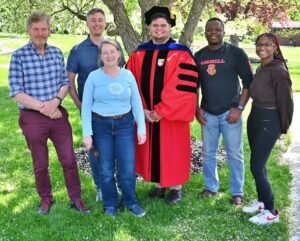
Welcome to the Parrish laboratory
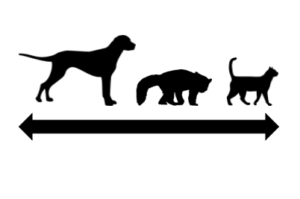
We are at the Baker Institute for Animal Health, College of Veterinary Medicine, Cornell University. The work of the laboratory is concerned with the study of viral diseases of animals, including dogs, cats, and horses, as well as wild animals like raccoons, mink, and other carnivores. The main viruses we have been studying include Canine and Feline Parvoviruses and Equine and Canine Influenza viruses the ways in which their host ranges are controled. We are also interested in Adeno-Associated viruses and their interactions with antibodies.
Our interests in virology are varied, and include the analysis of host range control, receptor binding, antibody binding to viral proteins and capsids, cell biology of cell entry, and viral evolution.
NEW AND NOTEWORTHY
Canine Influenza Studies and Information
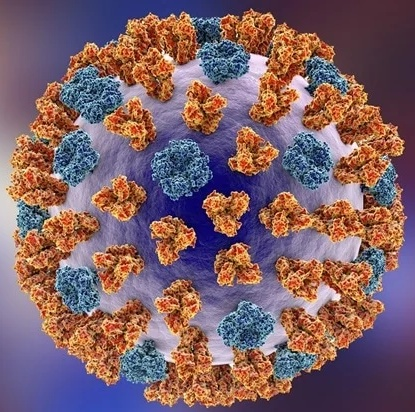
We are examining the canine linfluenza virus (CIV), a recently arisen A/H3N8 influenza virus that first emerged in greyhounds in Florida around 2000. The virus first emerged as a variant of the A/H3N8 equine influenza virus (EIV), so the canine virus is clearly a host variant virus. The CIV is now established in the domestic dog populations in several regions of the USA, where it causes mild disease. It is being maintained in dogs in shelters and kennels, but has not yet spread widely among the husehold dogs. We are now investigating the origins of the canine influenza, to determine the sources of the virus, its relationships with the equine influenza virus, its host range properties, and its evolution in dogs.
Recent Analysis of Canine Parvovirus Evolution, Capsid Structure and Trensferrin Receptor or Antibody Binding
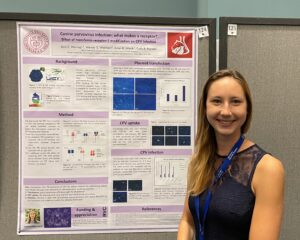
We are studying the emergence of canine parvovirus (CPV) as a new disease in dogs, and are gaining an understanding of how the virus was able to change its host range to infect dogs, as well as other wild animals hosts such as raccoons and foxes. A key part of the host range control is associated with the ability of the virus to bind to the receptor on the host cells - the transferrin receptor type-1 (TfR). The virus only needs to bind to one or two TfRs on the surface of the host cell to allow entry and infection, and the binding is controlled by a small number of changes in the viral capsid. Examining the evolution of the viruses on a global scale shows that the viral populations in different countries can be distinguished, and that there is ongoing evolution of the virus in nature.
Training Opportunitis.
The laboratory has a number of post-doctoral fellows, graduate students, as well as undergraduate student researchers.